Email: sales@farmseedsfeeds.com
WhatsApp: +27 83 63 30 523
Vermiculite Uses: Animal Feed & Industrial Applications
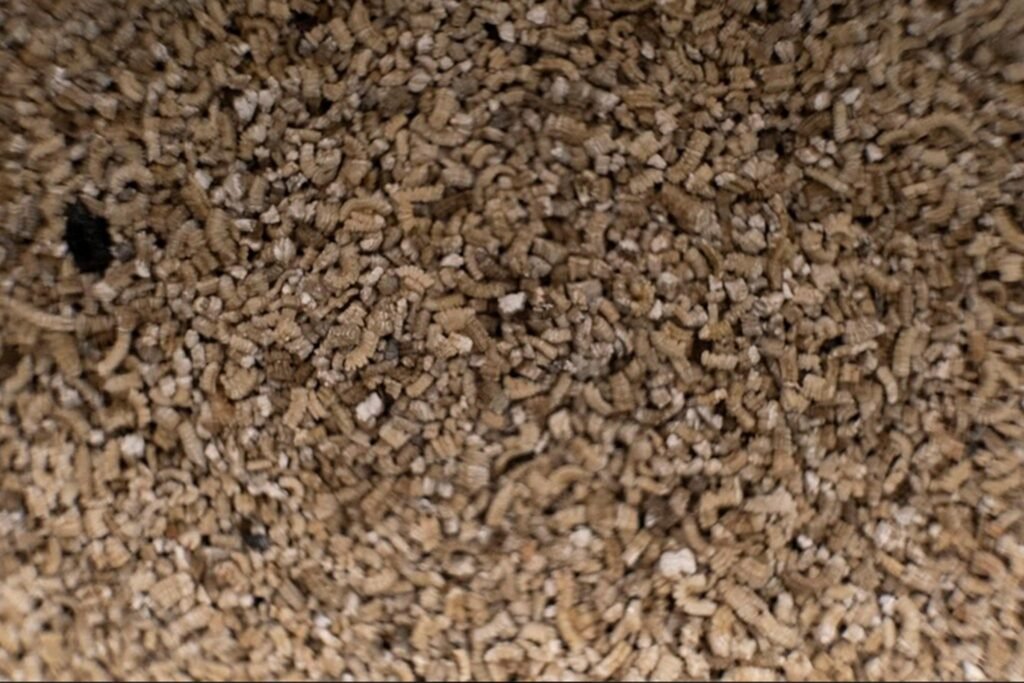
Vermiculite is a naturally occurring mineral valued across agriculture, animal nutrition, horticulture, construction, and several industrial sectors. When heated, vermiculite expands into a lightweight material with excellent absorption, aeration, and insulation characteristics.
Although many agricultural buyers associate vermiculite primarily with growing media, the mineral has a considerably wider range of applications. Different vermiculite grades can be used for animal feed premixes, horticulture, insulation, lightweight concrete, refractories, packaging, friction products and screeds.
Understanding these applications is particularly important when purchasing bulk vermiculite, because particle size and grade should be selected according to the intended application.
What Is Vermiculite?
Vermiculite is a naturally occurring hydrous phyllosilicate mineral with a layered structure.
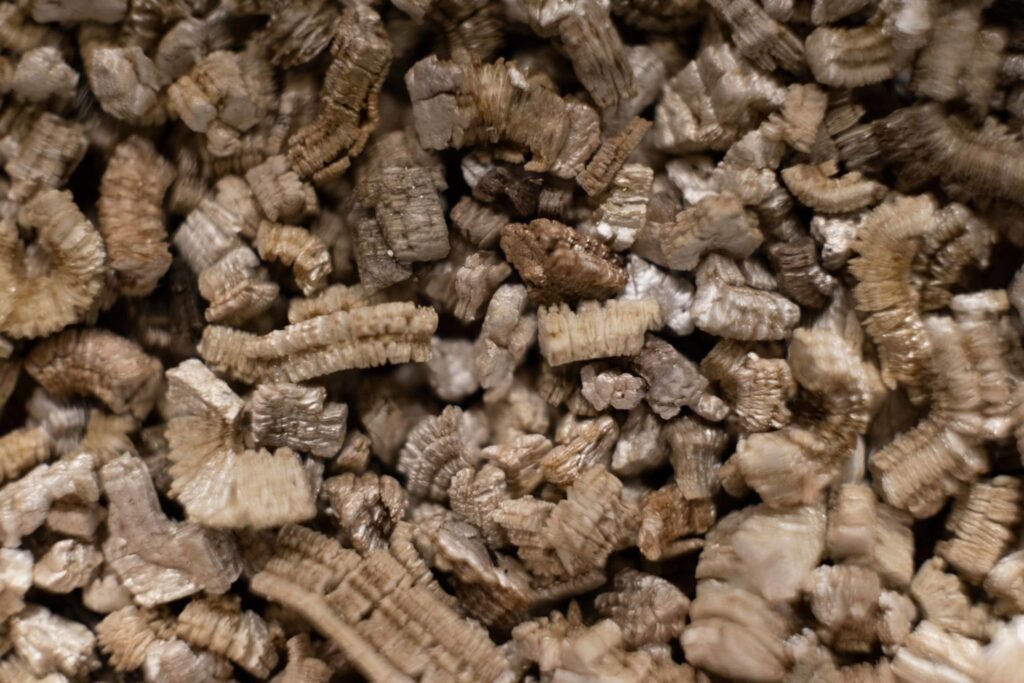
When subjected to high temperatures, moisture trapped between these layers turns into steam. This causes the mineral to expand significantly and produces the lightweight, accordion-like structure associated with expanded or exfoliated vermiculite.
The resulting material offers several commercially useful characteristics, including:
- High absorption capacity
- Low bulk density
- Good moisture retention
- Aeration
- Thermal insulation
- Chemical stability
- Ease of blending with other materials
These properties explain why vermiculite is used across several industries rather than belonging to only one product category.
1. Vermiculite for Animal Feed
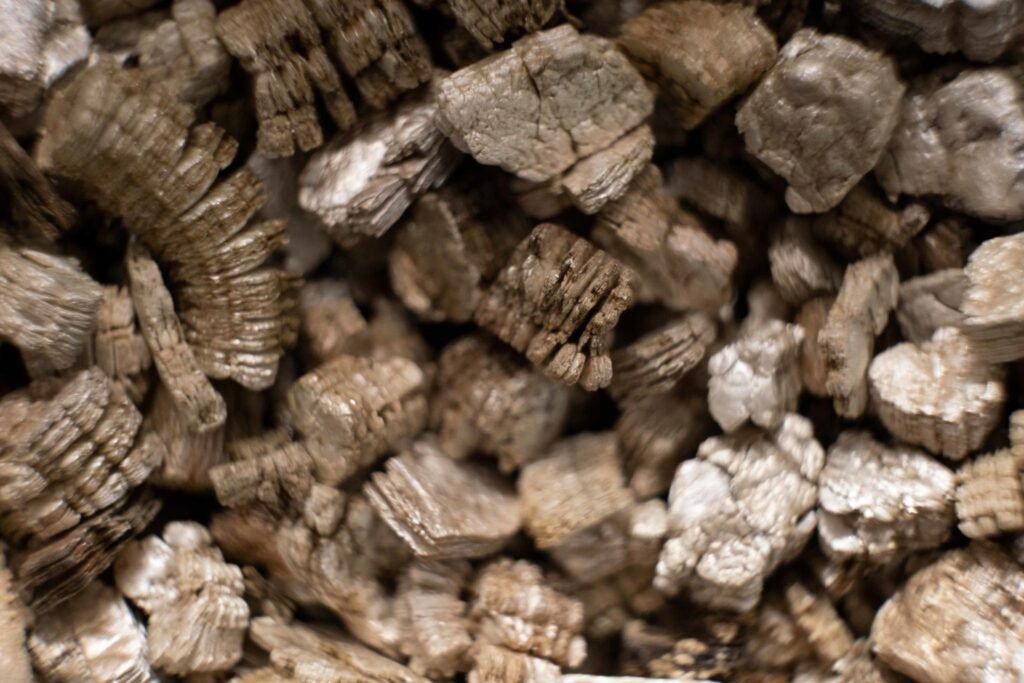
One of the most relevant agricultural applications is vermiculite for animal feed.
Fine grades of vermiculite can be incorporated into certain animal-feed and premix formulations. Its physical characteristics make it useful as a carrier material where manufacturers need to distribute liquid or fine ingredients throughout a dry mixture.
Vermiculite as a Feed Premix Carrier
Feed manufacturers frequently work with small quantities of vitamins, minerals and other ingredients that must be distributed consistently throughout a larger batch.
A suitable carrier can help incorporate these ingredients into a dry premix.
Vermiculite’s porous structure and absorption characteristics make appropriate grades useful as carrier materials in certain feed-premix applications.
Helps With Premix Flowability
Crude vermiculite can also be selected for feed-premix applications because of its flowability.
Maintaining consistent flow is particularly important during commercial mixing, packaging, storage, and handling.
Absorption Properties
Vermiculite has a porous structure capable of absorbing liquids. This characteristic can be useful when a feed manufacturer needs a dry carrier for appropriate liquid ingredients used within a formulated premix.
The exact grade and inclusion rate should always be determined by the feed formulation and applicable regulatory requirements.
2. Vermiculite for Horticulture
Horticulture is one of the best-known applications of expanded vermiculite.
Its combination of moisture retention and aeration makes it particularly useful in:
- Seed germination
- Seedling production
- Potting mixes
- Nursery substrates
- Propagation
- Root development
- Commercial growing media
Vermiculite absorbs water while maintaining spaces within the growing medium where air can circulate.
This creates a useful balance between water availability and root-zone aeration.
Vermiculite for Seed Germination
Fine and medium vermiculite grades are particularly useful for germinating seeds.
The lightweight structure helps maintain moisture around developing seeds without creating the same level of compaction associated with some heavier growing materials.
It can therefore be blended with peat moss, coco coir, and other substrates to produce specialised growing media.
3. Vermiculite for Construction
Vermiculite also has important applications within the construction industry.
Because expanded vermiculite is lightweight and provides thermal insulation, it can be incorporated into specialised construction materials.
Common applications include:
- Lightweight concrete
- Floor and roof screeds
- Insulating concrete
- Building insulation
- Specialty plasters
- Fire-resistant construction systems
Lightweight Concrete and Screeds
Expanded vermiculite can be combined with suitable binders to produce lightweight concrete and screed formulations.
The objective is generally not to replace conventional structural aggregates in every application, but to provide a lightweight material where insulation and reduced density are important.
4. Vermiculite for Insulation
The microscopic air spaces created during exfoliation give expanded vermiculite useful thermal insulation properties.
It can therefore be used in certain:
- Building insulation applications
- High-temperature insulation systems
- Industrial installations
- Specialty construction products
Its low density makes it particularly attractive where additional insulation is required without introducing excessive weight.
Vermiculite for Refractories
Selected vermiculite grades are also used in refractory applications.
Refractory products are designed for environments exposed to elevated temperatures. Vermiculite’s thermal characteristics make it useful as an ingredient in certain refractory and heat-resistant formulations.
Applications may include specialised materials associated with furnaces, kilns, fireplaces and other high-temperature installations.
6. Vermiculite for Packaging
Coarser vermiculite grades can also be used as packaging material.
The material is lightweight and absorbent, making it suitable for certain specialist packaging applications where cushioning or absorption is required.
The appropriate vermiculite grade depends heavily on the material being packaged and applicable transport regulations.
7. Vermiculite in Friction Products
Fine, super-fine and micron-sized vermiculite can also have applications within the friction-material industry.
Vermiculite has historically been incorporated into certain formulations where manufacturers require mineral ingredients with specific physical and thermal properties.
This represents a more specialised industrial market than horticulture or animal feed but demonstrates the versatility of the mineral.
Vermiculite Grades and Their Common Uses
Vermiculite is available in different particle sizes. Consequently, buyers should not assume that every grade is suitable for every application.
A practical classification is:
| Vermiculite Grade | Typical Applications |
| Large | Insulation, concrete, refractories, packaging |
| Medium | Horticulture, insulation, refractories |
| Fine | Horticulture, friction applications |
| Super-Fine | Animal feed, friction products, screeds |
| Micron | Animal feed, friction applications |
Particle-size specifications can vary between producers. Commercial buyers should therefore request the technical specification for the exact material being offered.
What Grade of Vermiculite Is Used for Animal Feed?
For feed-related applications, super-fine and micron grades are among the grades associated with animal-feed use.
However, purchasing vermiculite for feed manufacturing should involve more than simply selecting the smallest particle size.
Buyers should confirm:
- Intended feed application
- Particle-size distribution
- Product specification
- Regulatory status
- Contaminant limits
- Packaging
- Country of origin
- Required quantity
- Documentation available from the supplier
Material intended for industrial construction applications should not automatically be assumed suitable for feed manufacturing.
Vermiculite vs Perlite
Vermiculite and perlite are sometimes confused because both are lightweight minerals commonly incorporated into horticultural growing media.
However, their characteristics differ.
Vermiculite generally provides strong moisture-retention and absorption characteristics, whereas perlite is particularly valued for increasing drainage and aeration.
For this reason, commercial growing-media manufacturers sometimes combine vermiculite with perlite, peat moss, or coco coir to achieve a specific air-to-water balance.
Is Vermiculite Only for Gardening?
No.
Gardening and horticulture are major markets for vermiculite, but they represent only part of its commercial use.
Depending on grade and specification, vermiculite can be used across:
Animal Feed → Horticulture → Construction → Insulation → Refractories → Packaging → Friction Materials → Screeds
This broad application range is one reason vermiculite is traded as both an agricultural and industrial mineral.
Buying Bulk Vermiculite
Commercial buyers should identify the intended application before requesting a quotation for bulk vermiculite.
For example, an animal-feed manufacturer may require a much finer material than a construction company purchasing vermiculite for lightweight concrete.
Before ordering, specify:
Application: Animal feed, horticulture, construction or industrial use
Required Grade: Large, medium, fine, super-fine or micron
Quantity: Required tonnage
Packaging: Bags, palletised material or bulk packaging
Destination: Country, city or port of delivery
Documentation: Technical specifications and other required product documentation
Required Grade: Large, medium, fine, super-fine or micron
Quantity: Required tonnage
Packaging: Bags, palletised material or bulk packaging
Destination: Country, city or port of delivery
Documentation: Technical specifications and other required product documentation
Providing this information helps the supplier recommend the appropriate grade and prepare an accurate commercial quotation.
Frequently Asked Questions
What is vermiculite used for?
Vermiculite is used in animal-feed premixes, horticultural growing media, seed germination, insulation, lightweight concrete, screeds, refractories, specialist packaging, and certain friction products.
Can vermiculite be used in animal feed?
Certain grades of vermiculite are used in animal feed and premix applications. Buyers should purchase material specifically supplied and documented for the intended feed application.
Which vermiculite grade is used for animal feed?
Super-fine and micron vermiculite are commonly associated with animal-feed applications, although exact specifications vary between manufacturers.
Is vermiculite good for plants?
Yes. Vermiculite is widely used in horticulture because it can retain moisture while helping maintain aeration within growing media.
Is vermiculite used in construction?
Yes. Construction applications include lightweight concrete, screeds, insulation and specialised heat-resistant products.
Can I buy vermiculite in bulk?
Yes. Vermiculite is commercially supplied in different grades and packaging configurations. Bulk buyers should specify the required particle size, application, quantity, and delivery destination when requesting a quotation.
Bulk Vermiculite for Animal Feed and Agricultural Applications
Vermiculite is far more than a gardening mineral. Its combination of absorption, low density, aeration, and thermal properties gives it applications ranging from animal feed and horticulture to construction and industrial manufacturing.
For Farm Seeds & Feeds customers, the most relevant category is Animal Feed & Feed Additives, particularly where suitable fine-grade vermiculite is required for feed-premix applications.
Commercial buyers looking for bulk vermiculite for animal feed, premixes, or agricultural applications should specify their required grade, quantity, packaging, and destination when requesting a quotation.
Request a Bulk Vermiculite Quote
Looking for vermiculite for animal-feed premixes or agricultural applications?
Contact Farm Seeds & Feeds with your required quantity, grade, application, and delivery destination to request pricing and product specifications.
Minimum Order Quantity (MOQ): 2 MT